
VELUX accelerates biodiversity and nature protection efforts with new ambitious plan
The VELUX Group has completed biodiversity assessments at six key sites across Denmark, Italy, Hungary, and Poland, kicking off a new company-wide initiative to protect and restore nature. Using a tailored methodology developed with experts, assessments can establish a baseline for biodiversity across all VELUX locations with outdoor green areas, helping to guide future action. This work is part of broader ambitions to reduce our impact on biodiversity and integrate nature solutions across the entire VELUX value chain.
As a first step towards promoting biodiversity across all company sites, the VELUX Group has assessed six different locations. The work is part of a larger program designed to address biodiversity conservation and impact reduction throughout the entire VELUX value chain.
VELUX has worked with Fælleshaven, Deloitte and BioCircular to establish a comprehensive methodology for assessing the state of biodiversity across approximately 40 company sites. Building on tools from organisations such as Society for Ecological Restoration and Science Based Targets Network, the new methodology is tailor-made for VELUX, a global company present in 37 countries and across several climate zones.
Biodiversity is critical to our business. Many of the raw materials we use in our products, such as aluminum, steel, and copper, come from some of the most biodiverse areas of the world. However, resource scarcity and nature-related risks are a direct threat to the ecosystems we rely on, and we are already starting to see the impact of climate change and extreme weather events. That’s why we’re taking concrete steps to mitigate these risks and reduce our impact, says Wouter de Groot, Head of Sustainability at the VELUX Group, adding:
The first step in accelerating our biodiversity efforts is to improve our own operations as we aim to roll out initiatives across all relevant locations during the next couple of years. We are excited to apply this new methodology which makes a broad biodiversity challenge both concrete and actionable for a business like ours. Our approach builds on three key principles; avoiding impact on biodiversity wherever possible, reducing impact when it can’t be fully avoided and working to protect and restore ecosystems.

A value chain approach for promoting biodiversity
The first steps were initiated in 2023 with Fælleshaven as a strategic partner of the project.
VELUX used its Hørsholm headquarters as a playground to explore how to get started on working with biodiversity from both a strategic and operational perspective, using these learnings to build a global standardized framework for improving biodiversity across all sites. By applying this framework to a local context, we can speed up implementation of the most impactful improvement initiatives at habitat level across sites and thereby support the enhancement of related native species.
During 2025, the VELUX Group will carry out additional site assessments and start the implementation of actions at the first six sites. By 2030, all VELUX sites aim to have initiated or implemented actions that set them on the path to achieving their full biodiversity potential.
The long-term ambition is to address biodiversity conservation and impact reduction throughout the entire VELUX value chain. In 2024, a materiality assessment was conducted. The next step is to carry out an assessment of the entire value chain, looking at impacts, dependencies, risks and opportunities. This will help identify potential opportunities for suppliers to mitigate negative effects on biodiversity.
Companies see loss of biodiversity as a threat but lack tangible targets
According to a World Economic Forum report, half of the world’s total GDP is dependent on access to natural resources. This clearly underlines the importance of acting within biodiversity and nature protection.
Business and biodiversity. No doubt one of the most complex parts of a company’s sustainability journey. Leading with nature is a fundamental shift that raises a new set of questions and for most companies is still a very complex subject to get around. Commitments like this are essential to reversing current trends, but research unfortunately also shows that even though close to 70% of Danish businesses see biodiversity impacts as a medium to large threat, less than 20% have set tangible biodiversity targets, says Lisbeth Juhl Christensen referring to a report published by WWF and Bain & Company.
On top of accelerating work on biodiversity, VELUX also finances forest restoration and conservation projects in Uganda, Madagascar and Vietnam in collaboration with WWF Denmark. The projects are designed to reduce and remove CO2 equivalent to the historic emissions of the company’s own operations (scope 1 and 2), while strengthening the biodiversity of the project areas.
Details: How VELUX works with biodiversity site assessments
- For VELUX sites larger than 100,000m2, or in proximity to a protected area, the biodiversity site assessment is conducted by an external biodiversity expert on site, and in collaboration with a local team. For VELUX sites smaller than 100,000 m2, local real estate and facility services conduct the assessment with support from an external biodiversity expert.
- All data collected across VELUX sites will be entered into the Global Biodiversity Information Facility. This international network and data infrastructure platform provides open access to biodiversity data, supporting research and policy decisions worldwide.
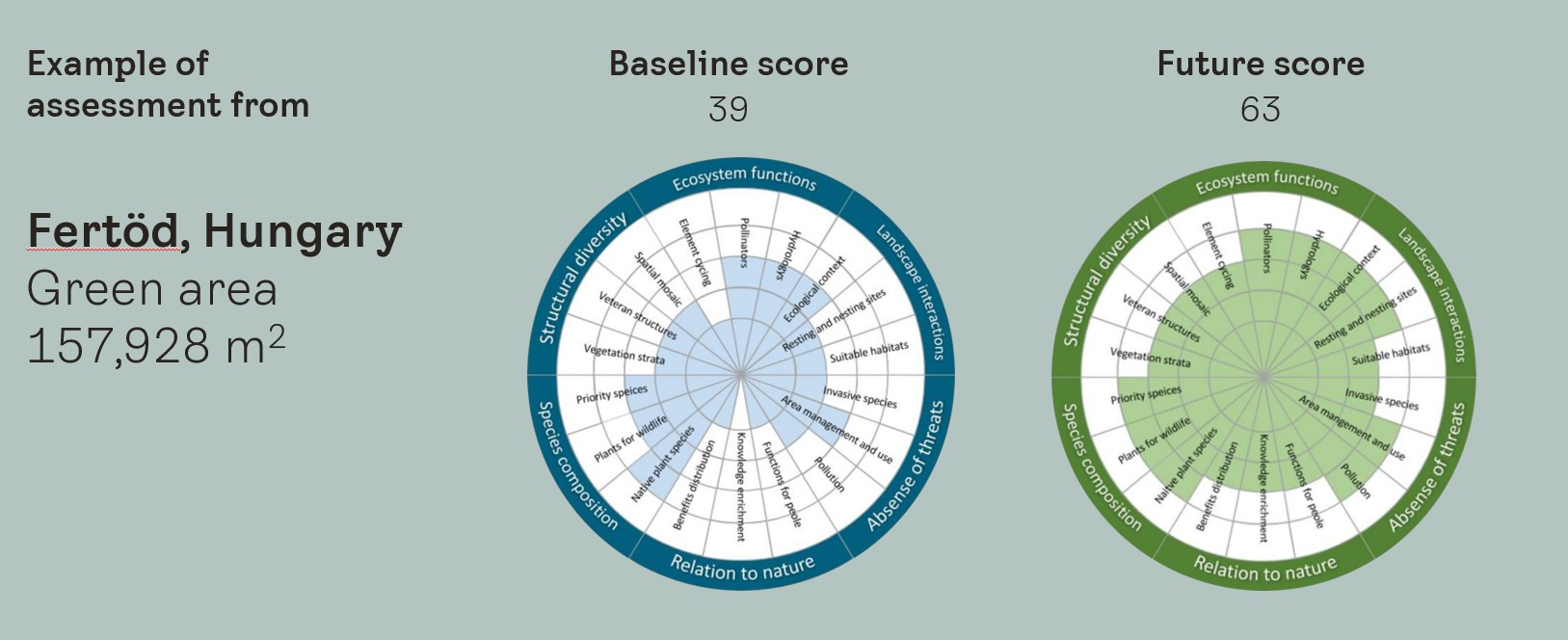
- All sites will get a baseline state defining the current and potential future scores – a so-called BioWheel – which is based on the Society for Ecological Restoration’s standard for ecosystem restoration and is adapted to the types of nature surrounding VELUX facilities.
- To support sites with their biodiversity projects, VELUX has created a biodiversity playbook, an initiative catalogue, as well as a maintenance guide for site managers.
About the VELUX Group
VELUX roof windows have been bringing daylight and fresh air into peoples’ homes around the world for more than 80 years, creating better living environments. We offer a range of products including roof windows and modular skylights, decorative blinds, sun screening products, and roller shutters, as well as installation and smart home solutions. They help create bright, healthy, and energy-efficient places for people who live, work, learn, and play under the roof. We work globally – with sales and manufacturing operations in 37 countries and around 12,000 employees worldwide. The VELUX Group is owned by VKR Holding A/S, a limited company owned by the Villum Foundation and members of the Kann Rasmussen family. In 2024, the VELUX Group had a total revenue of EUR 2.96 billion while VKR Holding had a total revenue of EUR 3.87 billion. The same year, the Villum Foundation and the VELUX FOUNDATION donated a total of EUR 169 million in charitable grants.
For more information about the VELUX Group, visit velux.com.